
Key facts
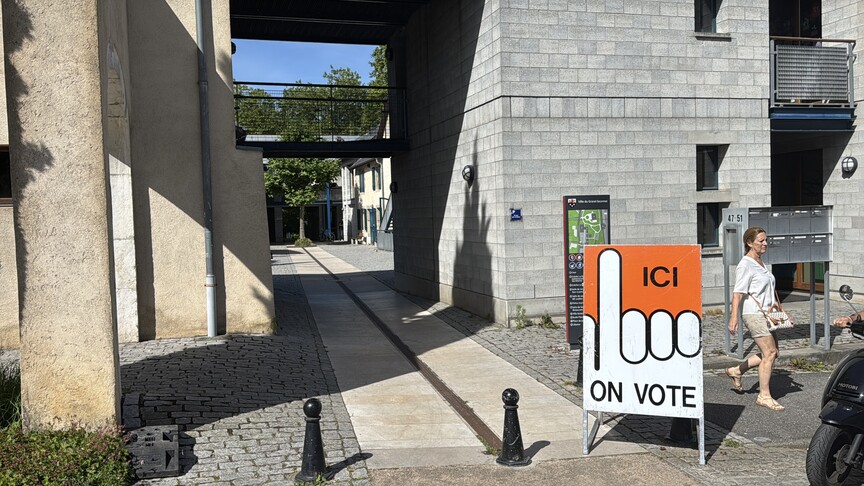
Switzerland votes Sunday on easing arms export rules in a referendum that pits security concerns and a billion-dollar arms industry against the country’s neutral and humanitarian traditions.1
The landlocked country currently does not export to nations involved in armed conflicts and insists on being consulted if any of its clients want to transfer Swiss-made arms onwards to another state.1
Under Switzerland’s direct democracy system, left-wing parties and NGOs forced a referendum on the issue, arguing that the changes endangered Swiss neutrality because weapons could end up in lawless states or military conflicts.1
A close contest for the War Materiel Act
The government argued that Russia’s 2022 invasion of Ukraine had changed the security calculations in Europe..1 Parliament eased the restrictions late last year, with the government backing the changes.1
Three surveys published on November 18 put the camp backing the changes to the War Materiel Act narrowly ahead on 49 percent, 49 percent and 42 percent, with some voters still undecided.1
According to estimates from the Stockholm International Peace Research Institute, Switzerland was the 20th-biggest arms exporter between 2021 and 2025, holding a 0.3-percent share of the global market.1
After two years of decline, Swiss arms exports surged by 43 percent to 948.2 million francs ($1.125 billion) in 2025 — primarily thanks to ammunition, armoured vehicles and spare parts shipments to neighbouring Germany.1
Swiss President Guy Parmelin told a press conference that if Switzerland wants to be able to source supplies should the need arise, it must supply military equipment itself.1
“If Switzerland wants to be able to source supplies should the need arise, it must supply military equipment itself,” Parmelin said.
Critics warn of arms flowing to Ukraine
The Greens, urging a No vote, say neither Switzerland nor Ukraine will feel any benefit: only the arms industry.1
Proponents, including the centrist and right-wing parties, argue that the reform is essential to keep the Swiss arms industry competitive and ensure its place in international supply chains.1
Around 20 NGOs, including Amnesty International Switzerland, have condemned the dismantling of the main safeguards governing Swiss arms exports.1
Patrick Walder is an arms control expert at Amnesty.1
“Swiss arms could thus more easily end up in the hands of actors likely to use them against civilian populations,” Walder said.
Lisa Mazzone is the Greens leader.1
“What was originally a ‘Ukraine law’ — that’s how it was presented — has become an ‘arms lobby law’ designed to send weapons in all directions, but not to Ukraine,” Mazzone said.
Fireworks, pensions and marriage tax
From restrictions on a long-standing national tradition to the rules governing arms exports in a neutral country, Swiss voters will decide on four proposals Sunday with implications for everyday life, public finances and security policy.2
The Nov. 29 national ballot will cover restrictions on fireworks, changes to arms export rules, the financing of an additional annual pension payment and the taxation of married couples.2
The latest opinion poll, published Nov. 18 by research institute gfs. bern on behalf of the Swiss Broadcasting Corporation (SRG SSR), shows strong support for fireworks restrictions and growing opposition to the marriage tax initiative, while votes on pension financing and arms exports remain closely contested.2
The Federal Council and parliament recommend approving the pension financing proposal and the amendment to the War Materiel Act, while opposing the initiatives on fireworks and the taxation of married couples.2
According to its authors, low-noise alternatives—such as Bengal lights and conventional volcanoes, would remain available, while cantons could authorize exceptions for major public celebrations, but not for private individuals.2
Opponents, including the Federal Council and parliament, argue that nationwide restrictions would undermine an established Swiss tradition and limit personal freedom, maintaining that existing cantonal and municipal regulations are sufficient.2