
Key facts
- The U.S. Food and Drug Administration recently approved a brain imaging marker used by the University of Wisconsin School.1
- Previously, Alzheimer’s disease could only be definitively diagnosed after death if an autopsy showed two abnormal proteins.1
- The FDA approved TAUKLARIFY, the imaging agent, in August.1
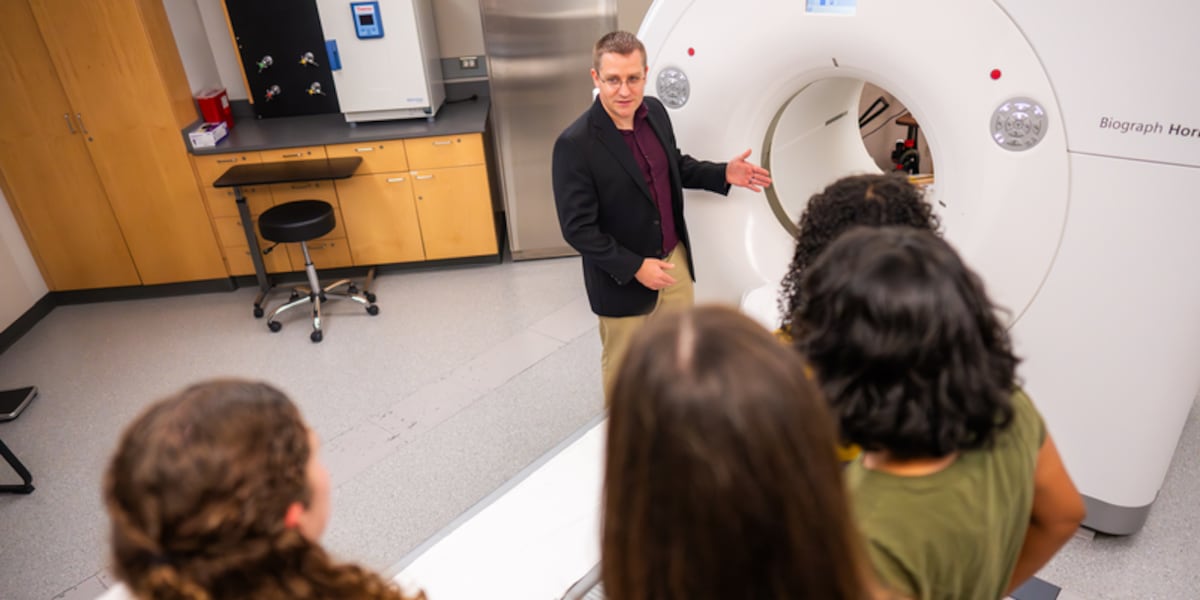
The U.S. Food and Drug Administration recently approved a brain imaging marker used by the University of Wisconsin School of Medicine and Public Health for Alzheimer’s disease research.1
The FDA approved TAUKLARIFY, the imaging agent, in August.1 TAUKLARIFY helps doctors see the buildup of tau, a protein closely associated with Alzheimer’s disease, in the brain.1
What it means for Alzheimer’s diagnosis
Previously, Alzheimer’s disease could only be definitively diagnosed after death if an autopsy showed two abnormal proteins, beta amyloid and tau, had morphed into malformed clumps in the brain.1
Dr. Nate Chin is medical director of the Wisconsin Alzheimer’s Disease Research Center and associate professor of medicine at the UW School of Medicine and Public Health.1
UW research helped secure the approval
Research from UW helped get the FDA’s approval of the agent.1
UW Health said that UW researchers have conducted over 2,200 scans using the tracer, which were used across 800 to 900 research volunteers and patients.1