

Key facts
- The EPA deployed 300 personnel to southeast Iowa after the Army Ammunition Plant detonation and reported no airborne lead in its initial update1
- University of Iowa Professor David Cwiertny said lab analysis of soil and water samples could take 24 hours or longer, and the Thanksgiving holiday could delay processing1
- Colin Wellenkamp is executive director of the Mississippi River Cities and Towns Initiative.1
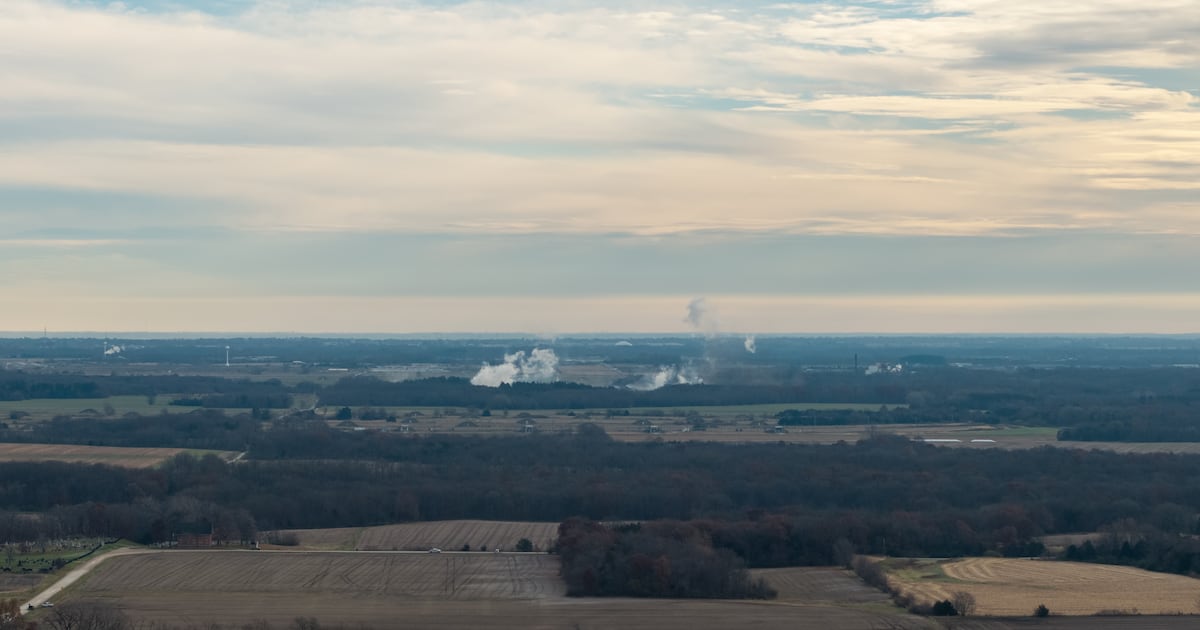
The Environmental Protection Agency is monitoring air quality and environmental conditions in southeast Iowa after the detonation of a stockpile of lead azide at the Army Ammunition Plant.1
Before the detonation, the EPA deployed 300 personnel to the area to collect data post-detonation..1 The agency’s real-time air monitors record readings every five minutes..1 In its initial update after the blast, the EPA reported that the monitors had not detected airborne lead.1
EPA samples air, soil, dust and water
The EPA has collected more than 1,200 samples of air, soil, dust and water..1 University of Iowa Professor David Cwiertny said the real-time readings are an encouraging indication, but do not provide the same detail as laboratory analysis.1
Cwiertny’s team collected soil samples and wiped surfaces in the area; those samples are being sent to a lab to measure how much lead they contain..1 Cwiertny said lab analysis could take as little as 24 hours if expedited, but could take longer depending on the lab..1 Cwiertny said the Thanksgiving holiday could delay processing and did not give a firm date for his team’s results.1
Military monitoring continues through Feb. 11
The agency’s emergency permit requires the military to monitor the area through Feb. 11..1 The emergency permit mandates public reporting of results and cleanup if contamination is found..1 Water testing is also being conducted by local utilities.1
Colin Wellenkamp, executive director of the Mississippi River Cities and Towns Initiative, said water-treatment plants on the Mississippi and Missouri rivers planned to sample water entering their facilities and check for unusual spikes or concentrations..1 Wellenkamp said plants have protocols to remove and filter lead and other heavy metals, however, detection of those pollutants is vital so they know to remove them.1
The Federal Emergency Management Agency said the shelter-in-place order has been lifted and Iowans in the affected areas can safely resume normal activities.1