
Key facts
- Northrop Grumman’s B-21 Raider stealth bomber has released a weapon in flight for the first time.1
- The B-21 was first conceived in 2014.2 It is intended to form a fleet of at least 100 aircraft that will supplement and eventually replace the B-1B Lancer and B-2 Spirit bombers by 2040, operating alongside modernized B-52 bombers into the 2050s.2 Its primary purpose is to serve as the aerial leg of America’s nuclear deterrent triad while also delivering conventional payloads in non-nuclear conflicts.2
- The second B-21 test aircraft allowed the team to run flight envelope expansion on one aircraft while evaluating avionics.1
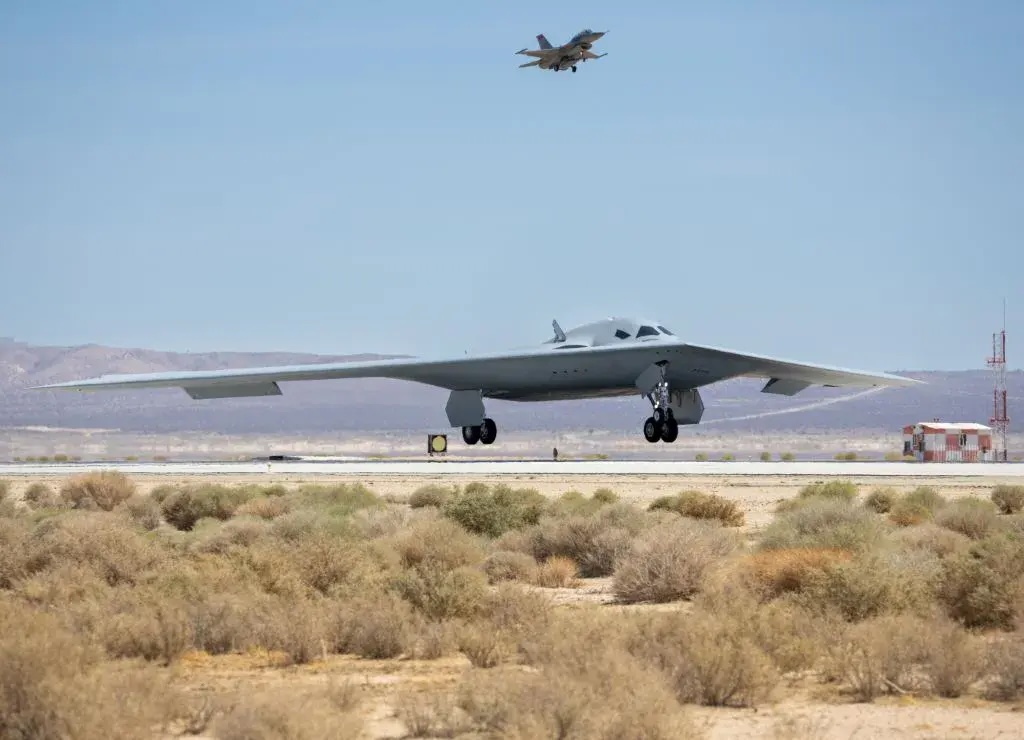
Northrop Grumman’s B-21 Raider stealth bomber released a conventional weapon during a flight test from Edwards Air Force Base, California, in the first week of November, moving the US Air Force’s next-generation bomber into weapons testing.2 1
The test relied on extensive modeling done in the B-21’s digital twin environment, which allowed the Raider Combined Test Force to simulate the weapon’s behavior and refine its trajectory before the physical release, the US Air Force said.1
A milestone before the scheduled 2027 entry into service
The B-21 was first conceived in 2014..2 It is intended to form a fleet of at least 100 aircraft that will supplement and eventually replace the B-1B Lancer and B-2 Spirit bombers by 2040, operating alongside modernized B-52 bombers into the 2050s..2 Its primary purpose is to serve as the aerial leg of America’s nuclear deterrent triad while also delivering conventional payloads in non-nuclear conflicts.2
The first prototype flew in November 2023 from Palmdale..2 1 Six test airframes were ordered for ground and flight testing, alongside the extensive use of digital twins to model the airframe and its systems before and during assembly..2 The B-21 is scheduled to enter service in 2027.2
A digital twin-led test ahead of schedule
Weapons integration testing became possible after a second B-21 test aircraft arrived at Edwards in September 2025, letting the team run flight envelope expansion on one aircraft while evaluating avionics, sensors and weapons systems on the other, Aerospace Testing International said..1 Northrop Grumman said it has completed lifetimes of fatigue testing on the airframe months ahead of schedule.1
The B-21 first flew in November 2023 from Palmdale and is being produced at low rate under the oversight of the Air Force Rapid Capabilities Office, Aerospace Testing International said..1 The first operational aircraft are due to arrive at Ellsworth Air Force Base, South Dakota, in 2027, where a detachment squadron is already preparing for the bomber, Aerospace Testing International said.1
A crewed, optionally manned bomber
The B-21 is flown by a crew of two, with an optionally manned capability built in for future missions..2 The aircraft has an estimated wingspan of about 152 ft (46 m) and an estimated maximum takeoff weight of roughly 180,000 lb (81,650 kg)..2 Powered by twin Pratt & Whitney non-afterburning turbofans, it is estimated to cruise at around Mach 0.8 with an unrefueled range of roughly 6,480 nautical miles (7,456 miles / 12,000 km) and an internal payload capacity of about 20,000 lb (9,100 kg), though official performance figures remain classified.2
Tom Jones, corporate vice president and president of Northrop Grumman Aeronautics Systems, said, “B-21 is another step closer to giving the U.S. unrivaled deterrence.”1 He said, “As we’ve heard from our Air Force partners, the B-21 Combined Test Force is the envy of the entire test community for its sustained rapid test pace and progress.”1